AIWrappers
Describe an AI tool in plain words and an agent builds it as a web app on your own domain, ready to share or sell.
- Type
- Client project
- When
- 2025
- Models
- 38 models, 5 providers
- Stack
- Next.js, PostgreSQL, Stripe Connect
What it does
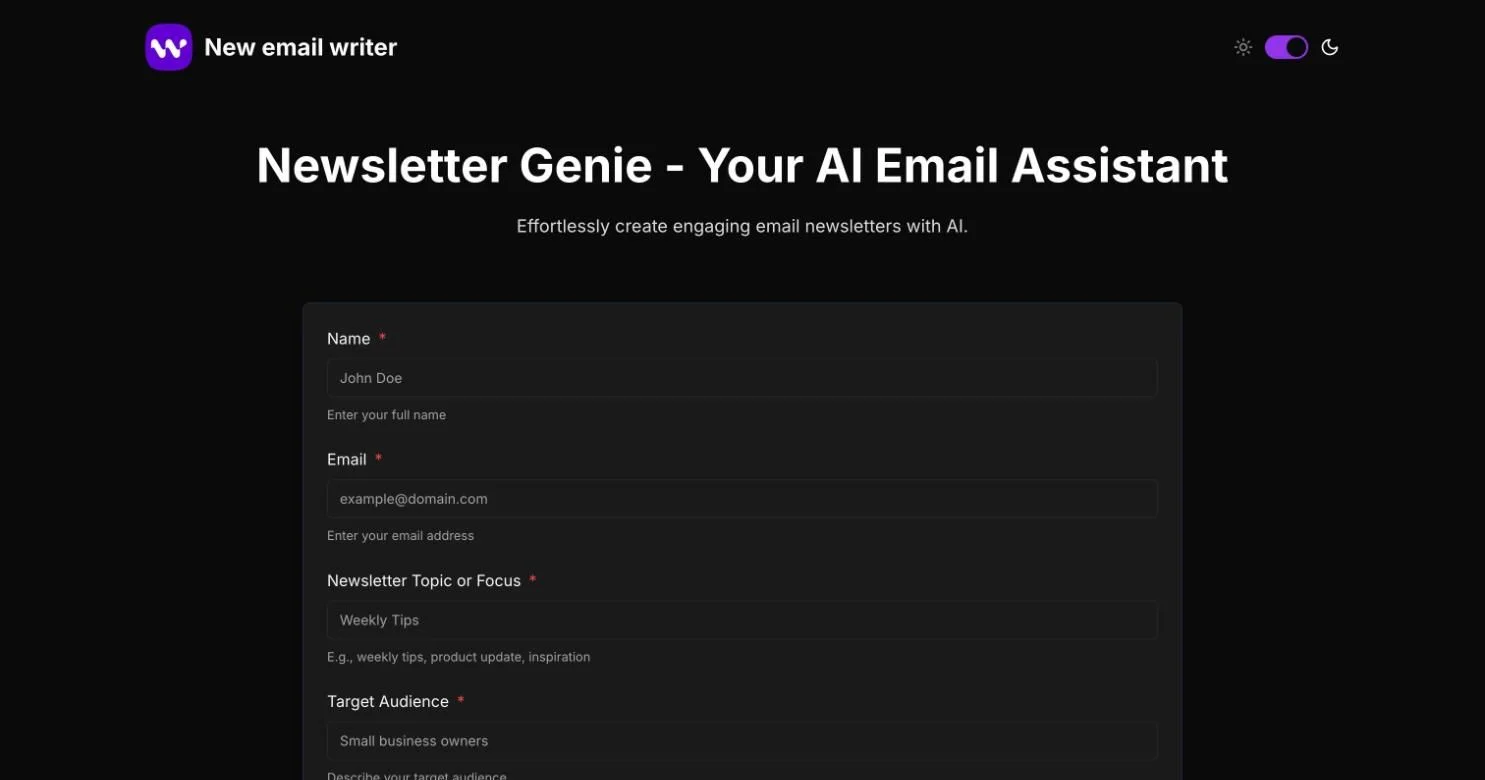
Sheharyar Ishfaq built AIWrappers as a client project in 2025. AIWrappers lets someone without code turn a prompt into a product. They describe the tool they want, an agent designs it (the form, the instructions for the model, the colours and the copy), and it goes live on a subdomain or their own domain. They can keep it public, protect it with a password, or charge for it.
How it works
My part
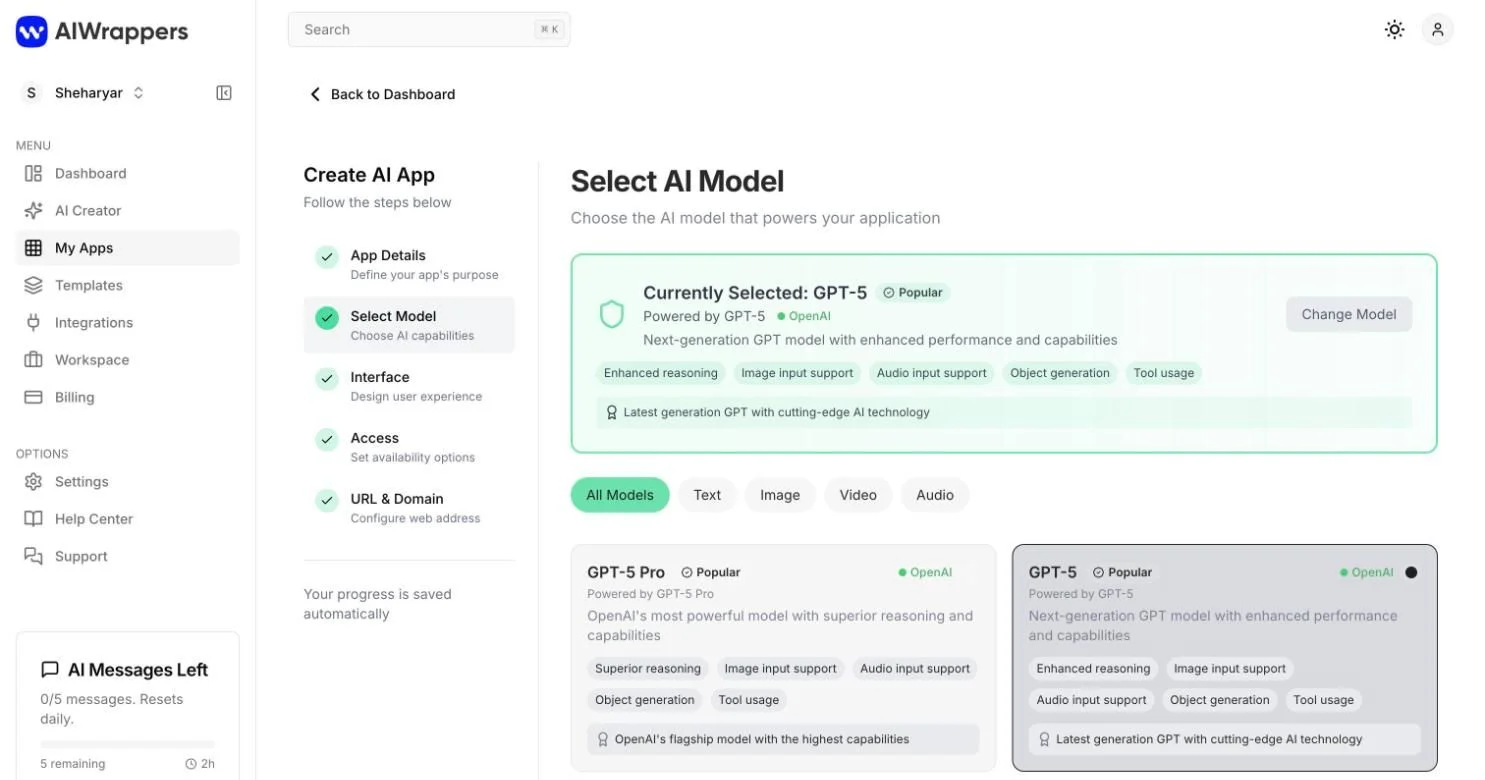
I built AIWrappers on my own, end to end: the creator agent, the app builder, model routing, custom domains, access control and Stripe Connect payments. It began as a prototype in March 2025 and grew through the year, most recently with newer models and a security update to Next.js.
Hard calls
The agent doesn't write code; it writes an app's settings: a form schema, a system prompt and a theme. Every app then runs on the same tested codebase, so a fix or a new model reaches all of them at once.
Each app owner connects their own provider keys, stored encrypted and used only for their apps. The platform never pays for someone else's inference, and owners keep control of their usage and costs.
The agent only builds single-screen tools and says no to everything else. A smaller promise it can keep beats a general one it can't, and the refusal is written into its instructions.